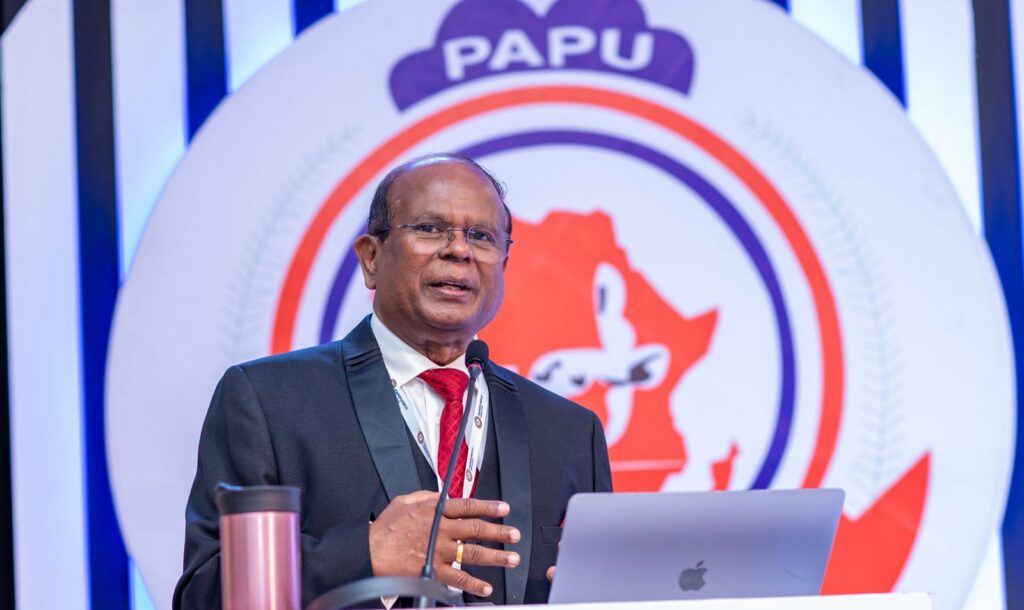
At the Pan-African Postal Union (PAPU) conference in Uganda, what emerged was more than dialogue—it was a moment of reflection on the future of the postal sector across Africa. Bringing together postal ministries, regulators, and operators, the conversation quickly moved beyond formalities to a defining question: what happens to the Post if it doesn’t transform—and what becomes possible if it does?
During the Ministerial Dialogue, John Samuel highlighted a central reality—the Post must better integrate its public service mandate with sustainable, revenue-generating models to remain relevant and continue supporting national growth. Without this shift, it risks gradual decline in usage and relevance.
The discussion quickly turned to opportunity. E-commerce is no longer an add-on but a core engine, technology must serve as the backbone, and new revenue models are essential to move forward. Across conversations, a consistent theme emerged: the infrastructure, trust, and reach already exist—what’s missing is the intent to fully leverage them.
Reframed this way, the Post moves beyond letters to become a platform for access, services, and the movement of goods, money, and opportunity. With potential contributions of up to 7% of GDP, the stakes are significant.
Rather than a sector in decline, Africa’s postal ecosystem is at a pivotal moment—one that calls not for preservation, but for reinvention.